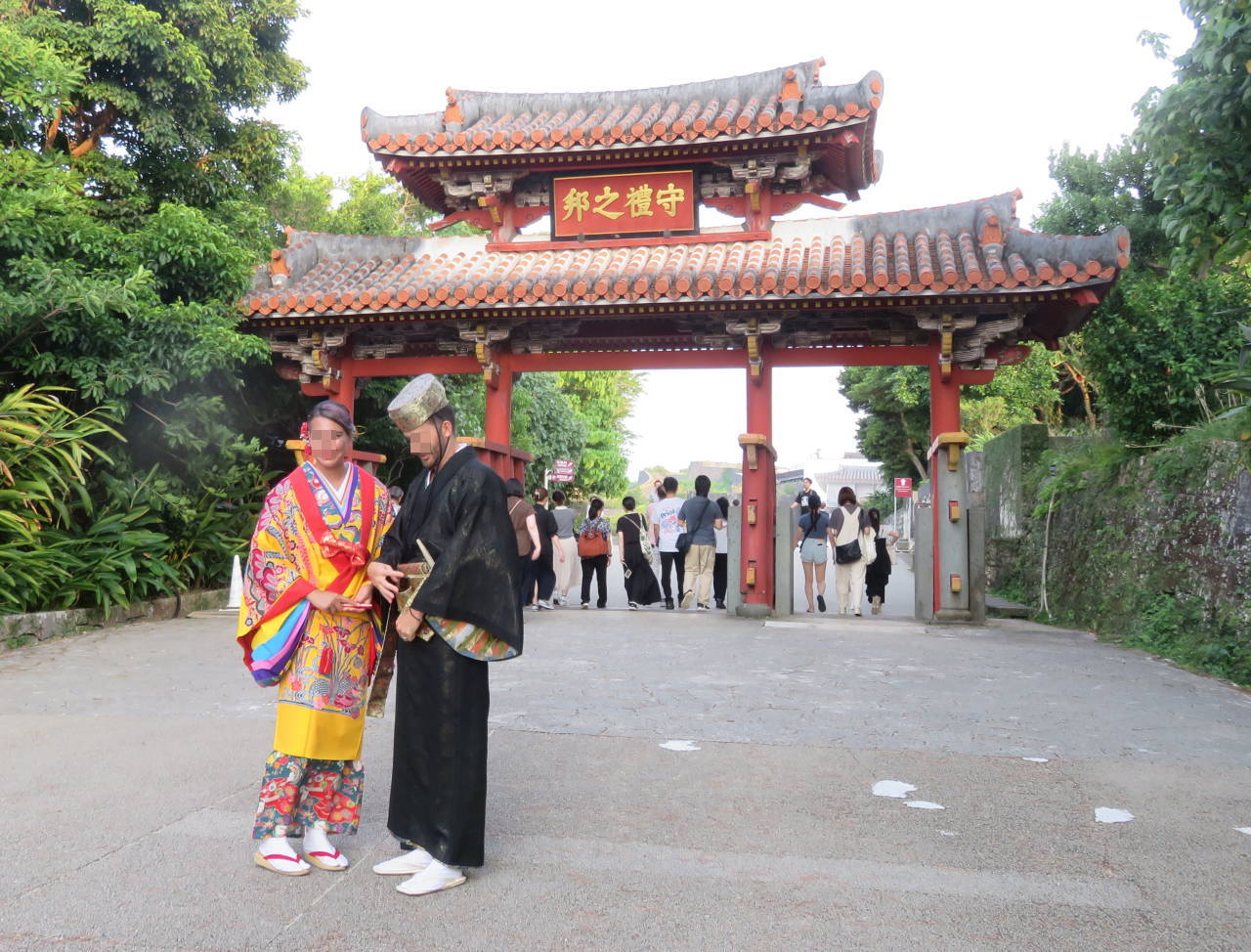
Southern Okinawa Main Island
The Gateway to History and Culture
Southern Okinawa is a region where the legacy of the Ryukyu Kingdom lives on through its many historical landmarks and cultural sites.
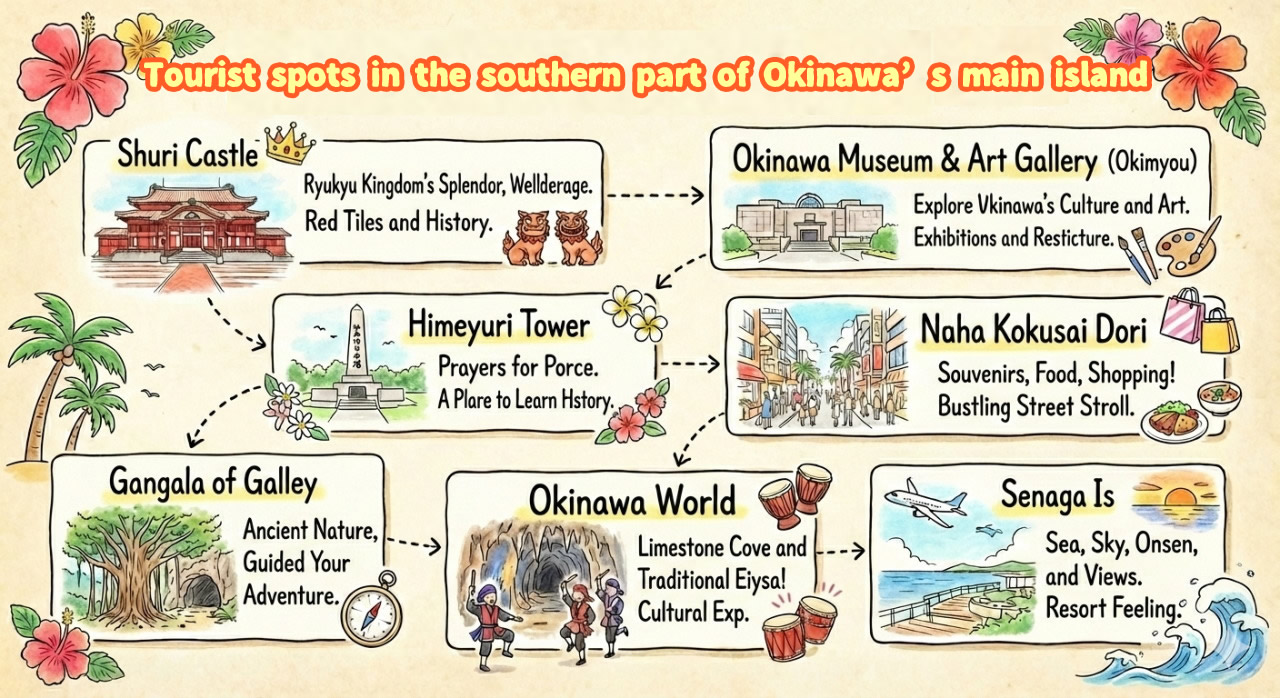
Shuri Castle (Shurijo)
An Iconic Symbol of the Ryukyu Kingdom Perched on a Hill
Shuri Castle served as the royal palace of the Ryukyu Kingdom for 450 years (1429–1879). As the center of politics, culture, and spirituality, it is a designated UNESCO World Heritage site.
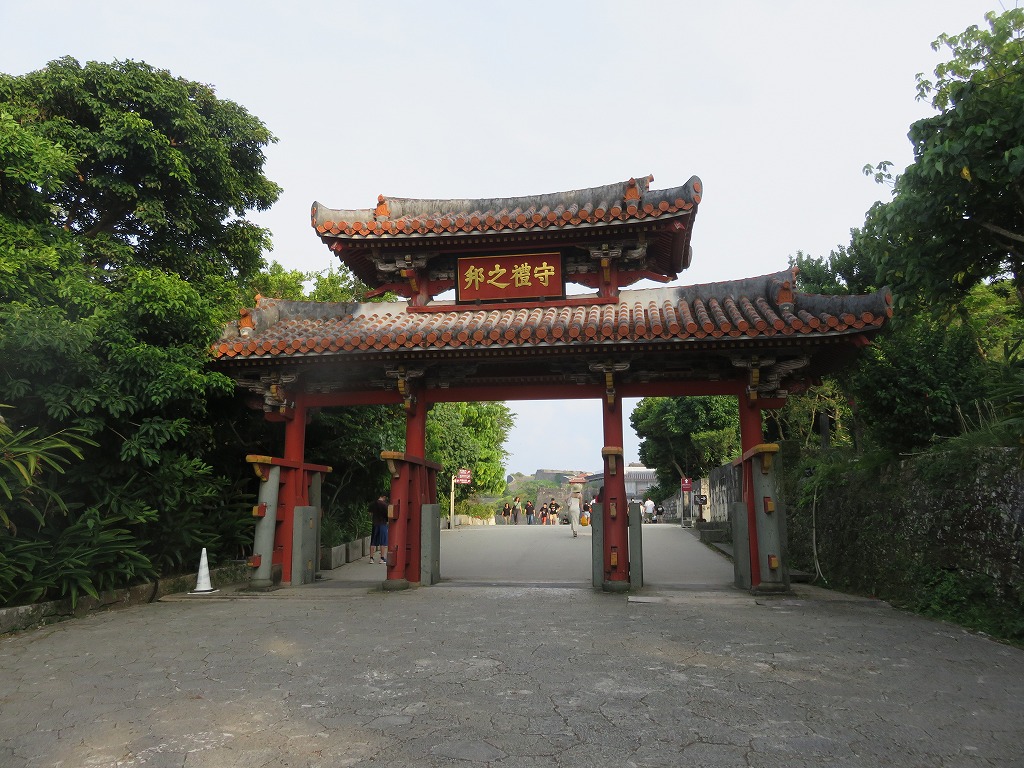
The iconic gate of Shuri Castle Park. It is one of Okinawa’s most famous landmarks and a must-visit spot for many travelers.
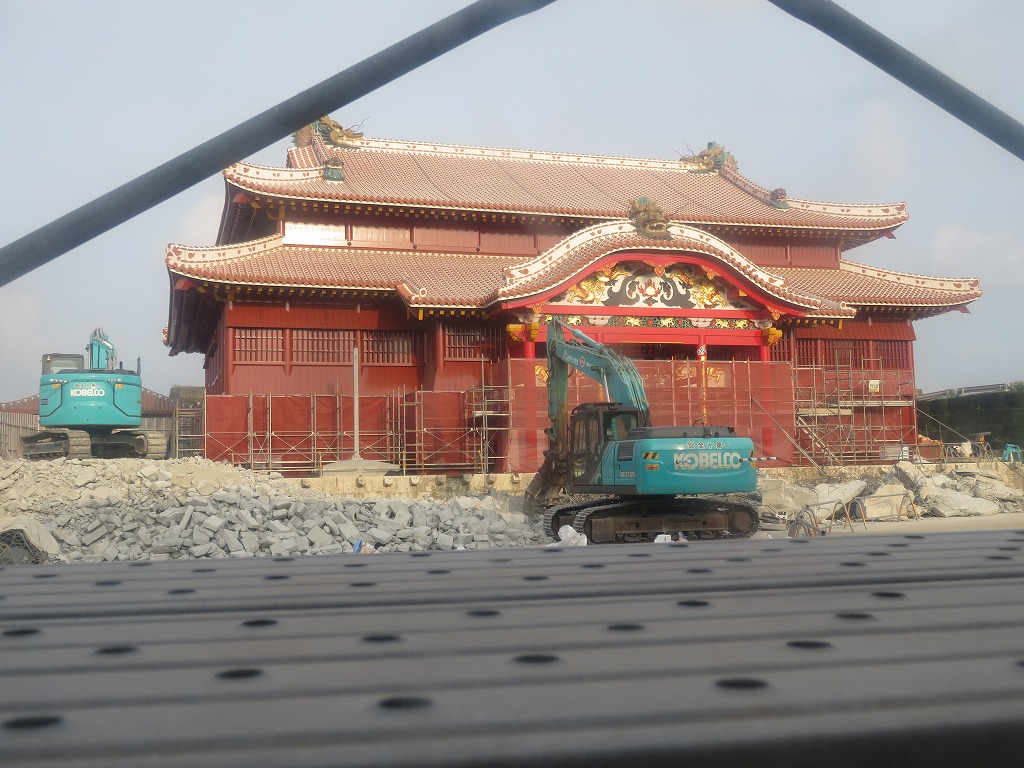
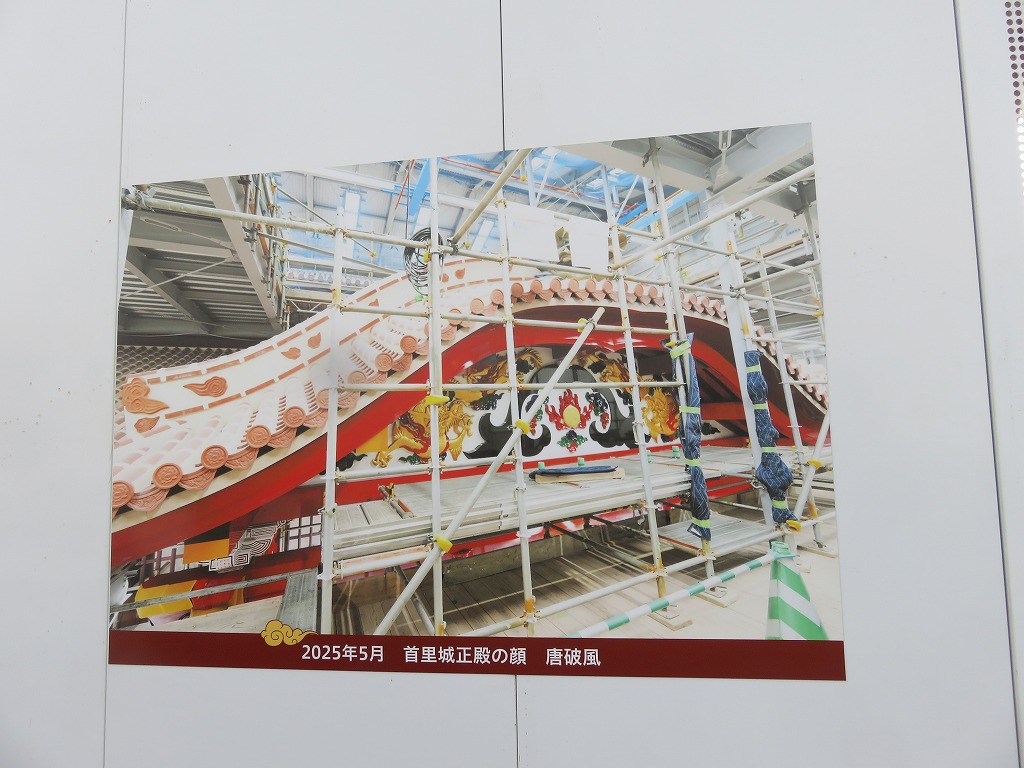
Following a tragic fire in October 2019, the castle is currently undergoing restoration with a goal to rebuild the Main Hall by 2026. Visitors can observe the recovery process firsthand through exhibits at the construction site.
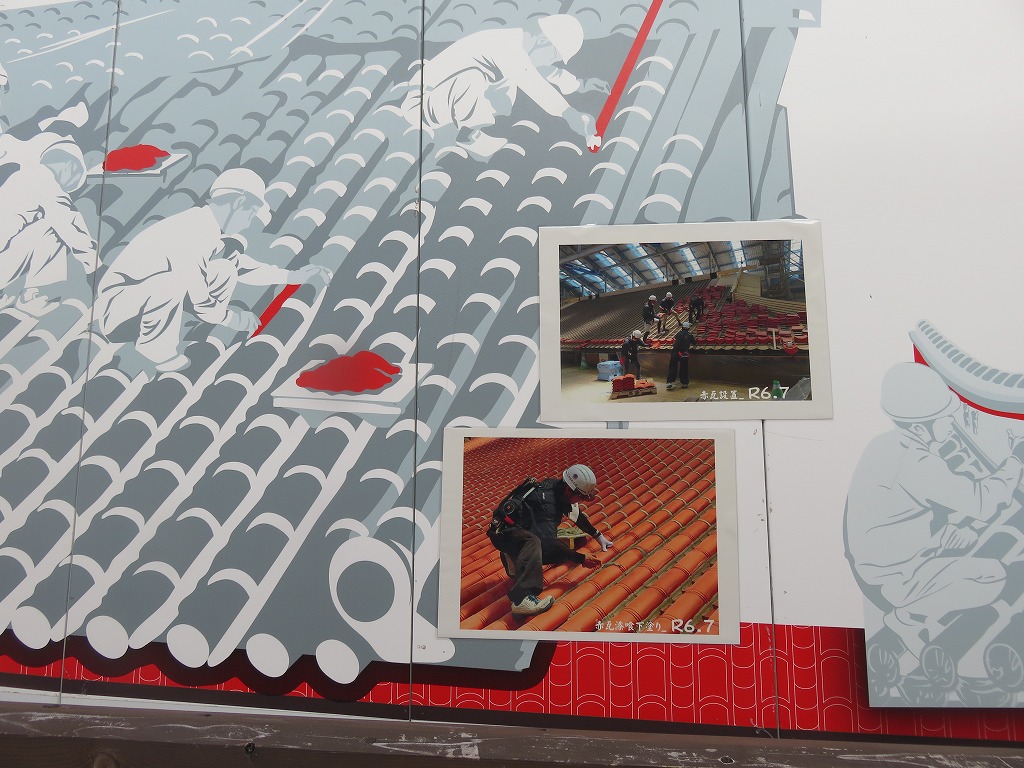
As of May 2025, the intricate “Karahafu” (ornamental gable) of the Main Hall was visible. These displays provide a unique insight into the traditional craftsmanship involved in the roof’s reconstruction.
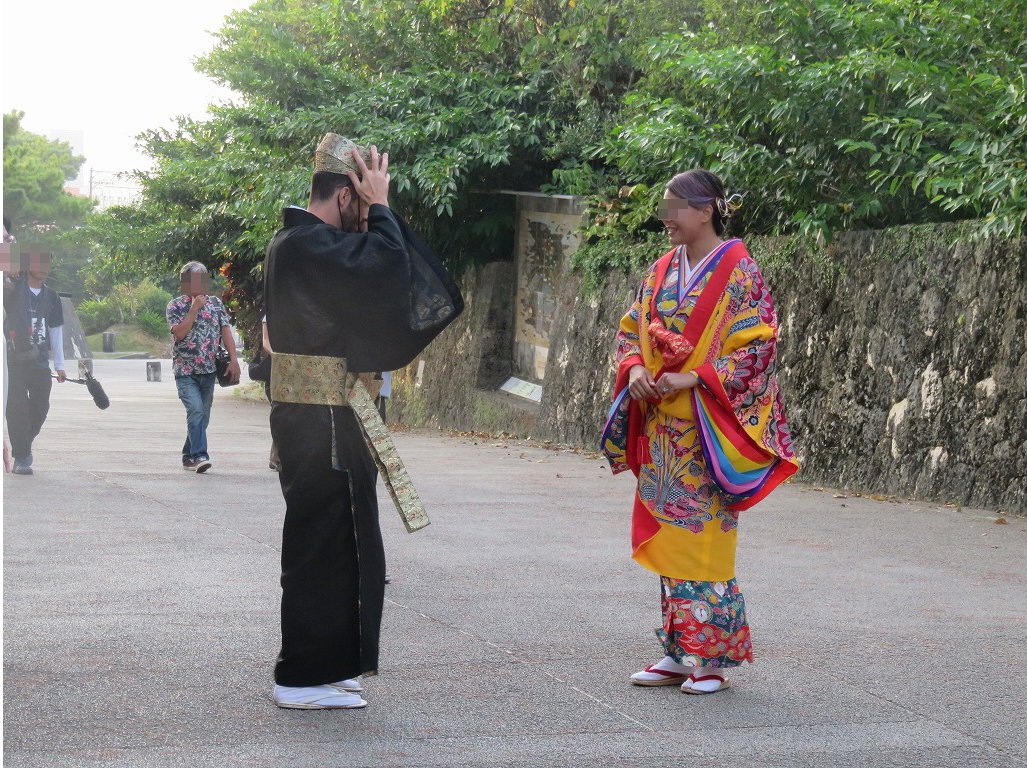
Ryuso: The Elegance of Traditional Attire
Near Shureimon Gate, you may encounter visitors dressed in “Ryuso,” the traditional costume of the Ryukyu Kingdom. Designed for the tropical climate, these airy garments feature vibrant colors and beautiful “Bingata” patterns.
Location: 1-2 Shuri Kinjo-cho, Naha City, Okinawa
Access: A 15-minute walk from Shuri Station (Yui Rail).
Hours: Free Area: 8:00 AM – 7:30 PM (July–Sept: until 8:30 PM, Dec–Mar: until 6:30 PM)
Phone:098-886-2020
Himeyuri-no-To (The Himeyuri Monument)
A Memorial for the Himeyuri Students and Teachers Who Perished in the Battle of Okinawa
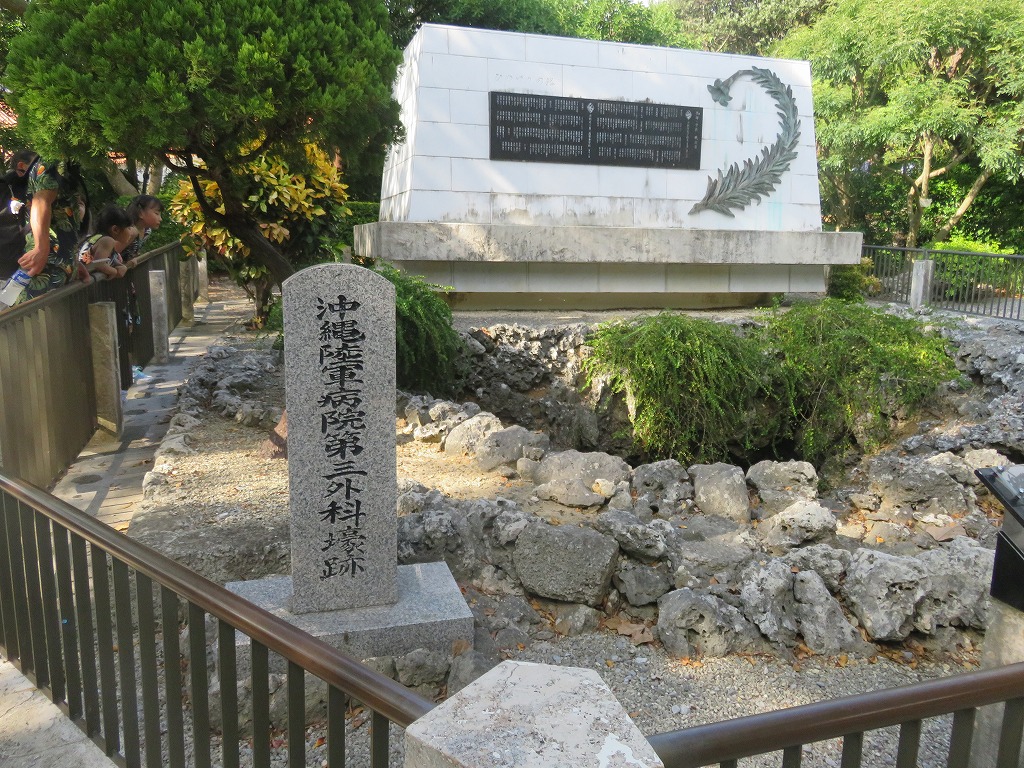
Located in Itoman City, Himeyuri-no-To is a memorial dedicated to the “Himeyuri Student Corps”—students and teachers who were mobilized as nursing staff and lost their lives during the Battle of Okinawa. The monument stands above the former Third Surgical Ward of the Okinawa Army Hospital, a cave (Abuchiraga) where many lives were tragically lost.
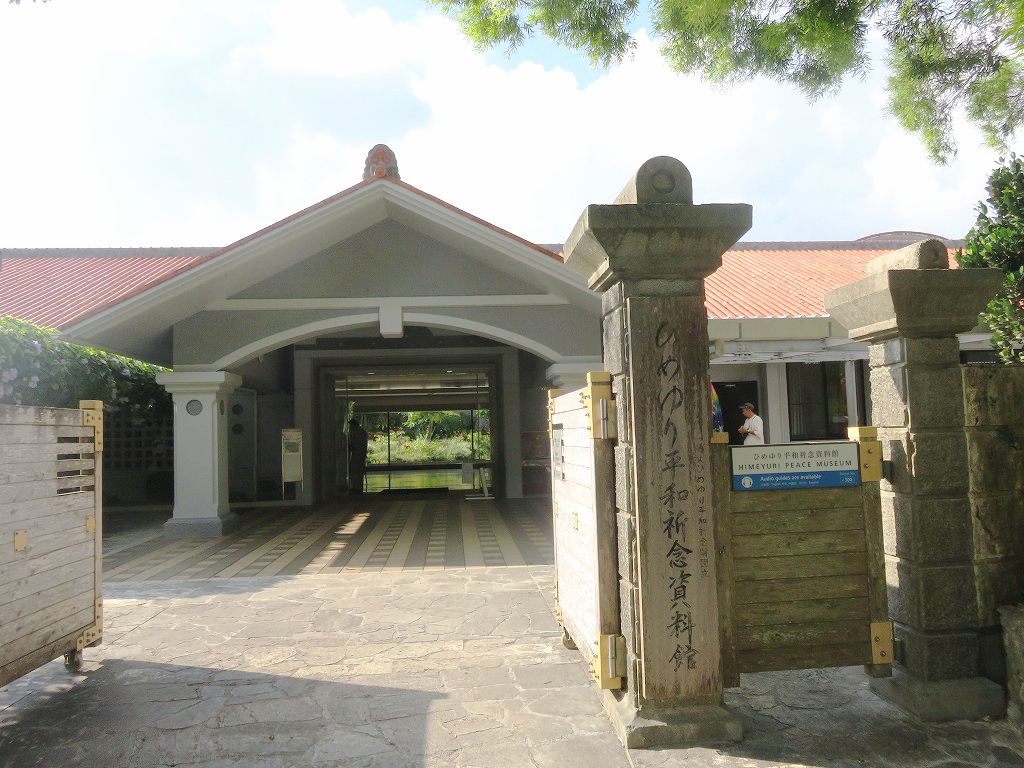
The museum displays personal belongings of the Himeyuri students and features a full-scale model of the Ihara Third Surgical Trench, the site of many casualties from gas shells. Through survivor testimonies, historical photos, and accounts of both school life and the battlefield, the museum conveys the tragedy of war and the preciousness of peace.
Visiting this site during the 80th anniversary of the war’s end deepened my resolve and prayers for lasting peace.
Location: 671-1 Ihara, Itoman City, Okinawa
Access: Approximately 20 minutes by car from the Tomigusuku IC on the Naha Airport Expressway.
Hours: 9:00 AM – 5:25 PM (Last entry at 5:00 PM) / Open year-round.
Phone:098-997-2100
Valley of Gangala
A Subtropical Forest Preserving the Footsteps of Ancient Humans
Located in Nanjo City, the Valley of Gangala is a lush canyon formed by the collapse of a limestone cave hundreds of thousands of years ago. The subtropical forest, nurtured over ages, is home to towering Banyan and Akagi trees. To explore this hidden world, visitors must join a guided tour (reservation required).
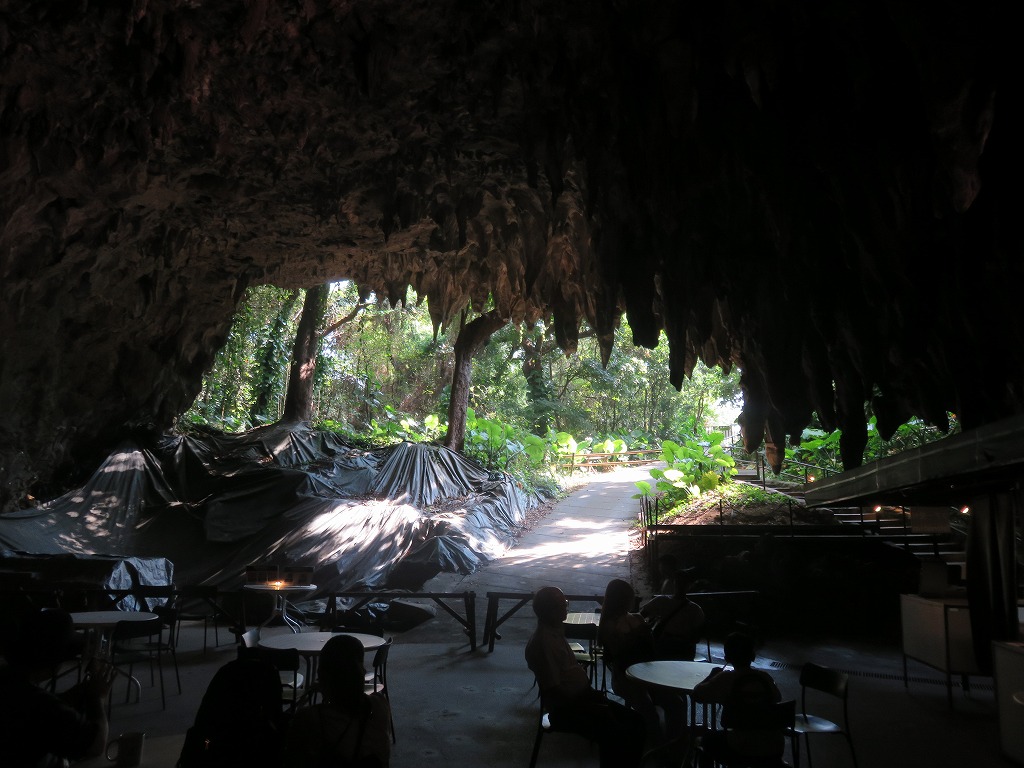
The entrance, set within a massive cave remnant, serves as the tour reception and a unique waiting lounge. Beverages are available for purchase. This cave system has yielded remarkable traces of ancient life, including the world’s oldest shell fishhooks (approx. 23,000 years old), Paleolithic stone tools, and human remains. Active excavations are still ongoing, and visitors can even view some of these precious archaeological sites during the tour.
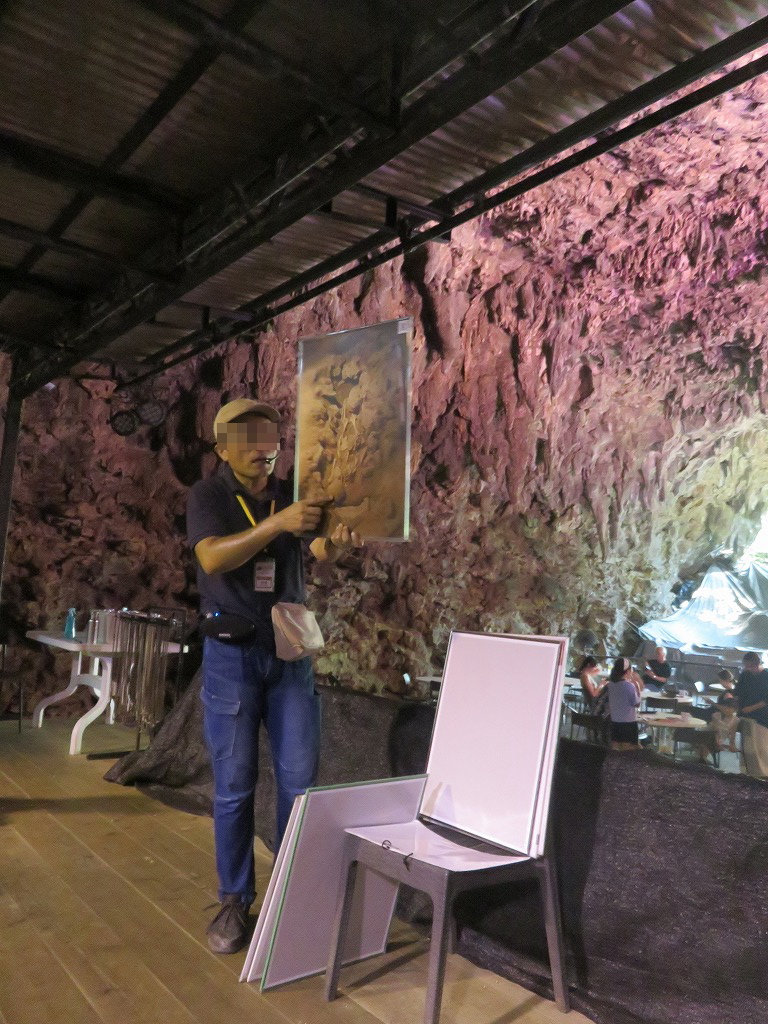
Before departing, guides explain the history of the “Minatogawa People”—Paleolithic humans discovered nearby in 1970. To ensure a comfortable journey through the forest, participants are provided with insect repellent and a canteen of cold Sanpin (jasmine) tea.
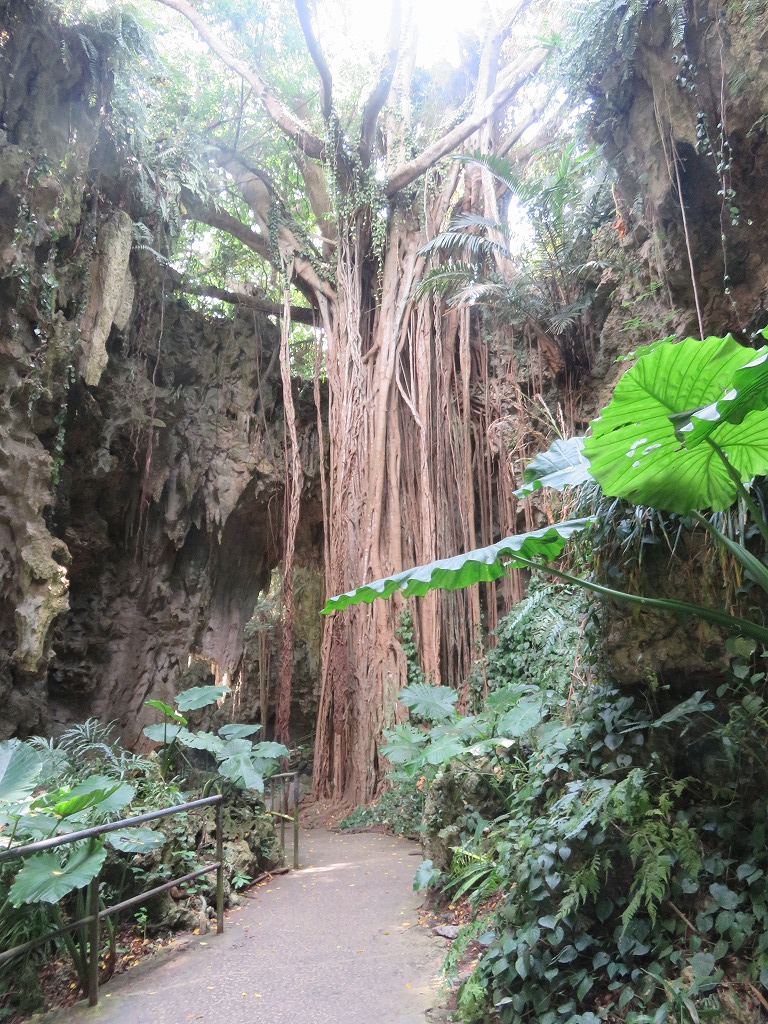
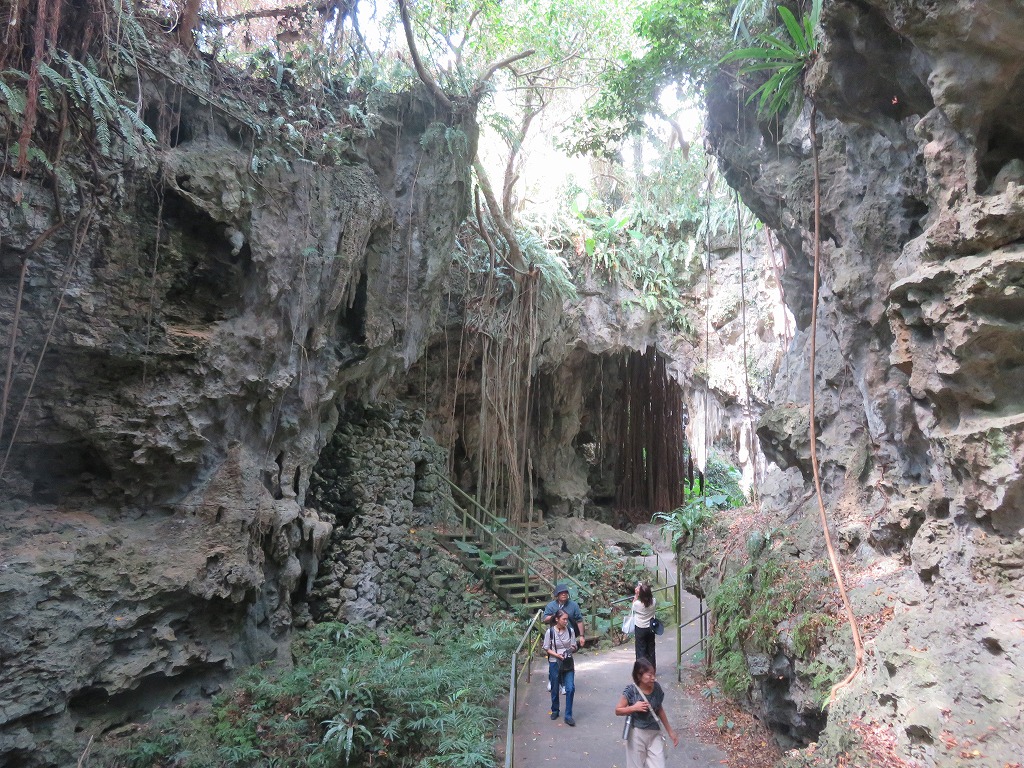
Location: 202 Maekawa, Tamagusuku, Nanjo City, Okinawa
Access: Approx. 30 min by car from Naha Airport; 10 min from Haebaru-Minami IC. Located right across from the entrance of “Okinawa World.”
Reservation Desk: 9:00 AM – 5:30 PM
Phone:098-948-4192
Okinawa World
Experience Okinawa’s History, Culture, and Nature All in One Place
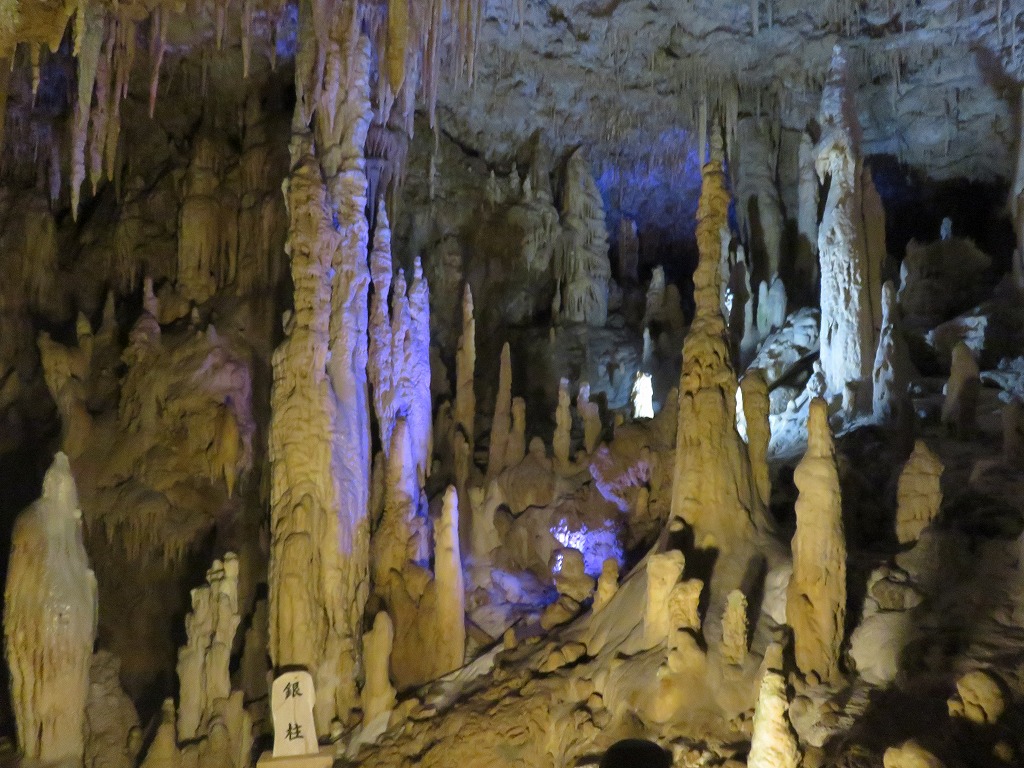
Located right next to the Valley of Gangala, Okinawa World is one of the island’s largest theme parks. Its main attraction is Gyokusendo, a spectacular 5km-long limestone cave formed over 300,000 years (with 890m open to the public). Visitors can also explore the Habu Museum Park, dedicated to the “Habu” (a famous venomous pit viper native to Okinawa), and the Kingdom Village, which authentically recreates the streetscapes of the Ryukyu Dynasty.
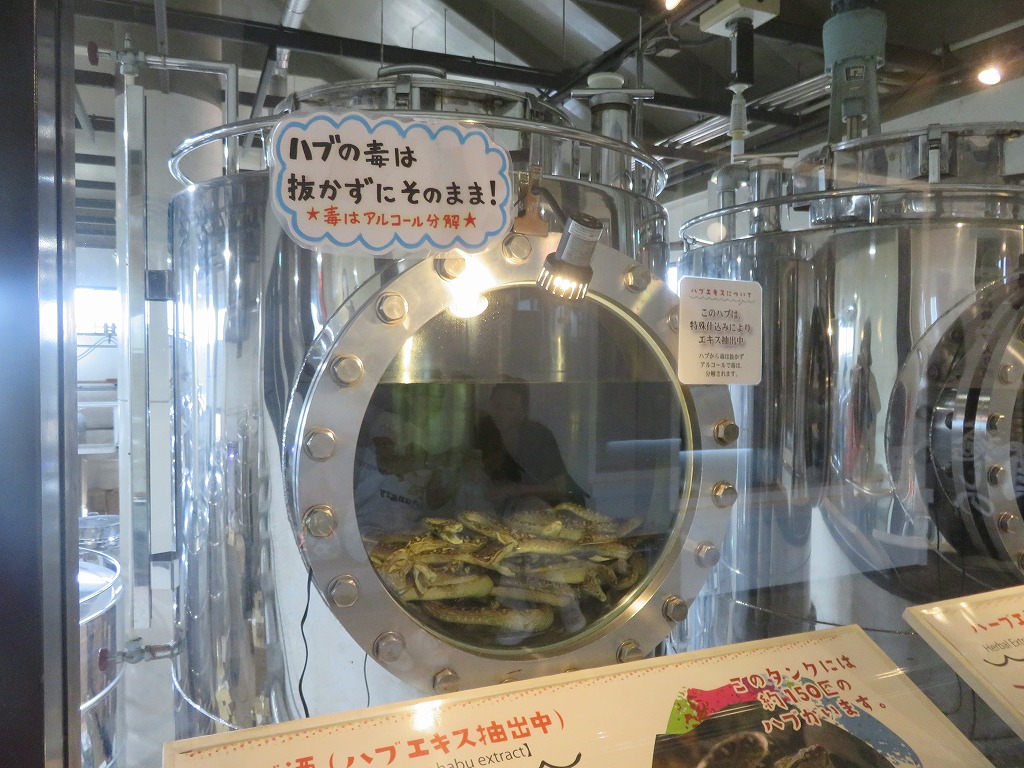
Inside the park, you can see the traditional production of “Habu-shu” (Habu snake liquor), which is available for purchase as a unique souvenir. Regarding the shows, the former “Habu vs. Mongoose” fight has been replaced with an educational performance focused on the ecology of snakes out of respect for animal welfare.
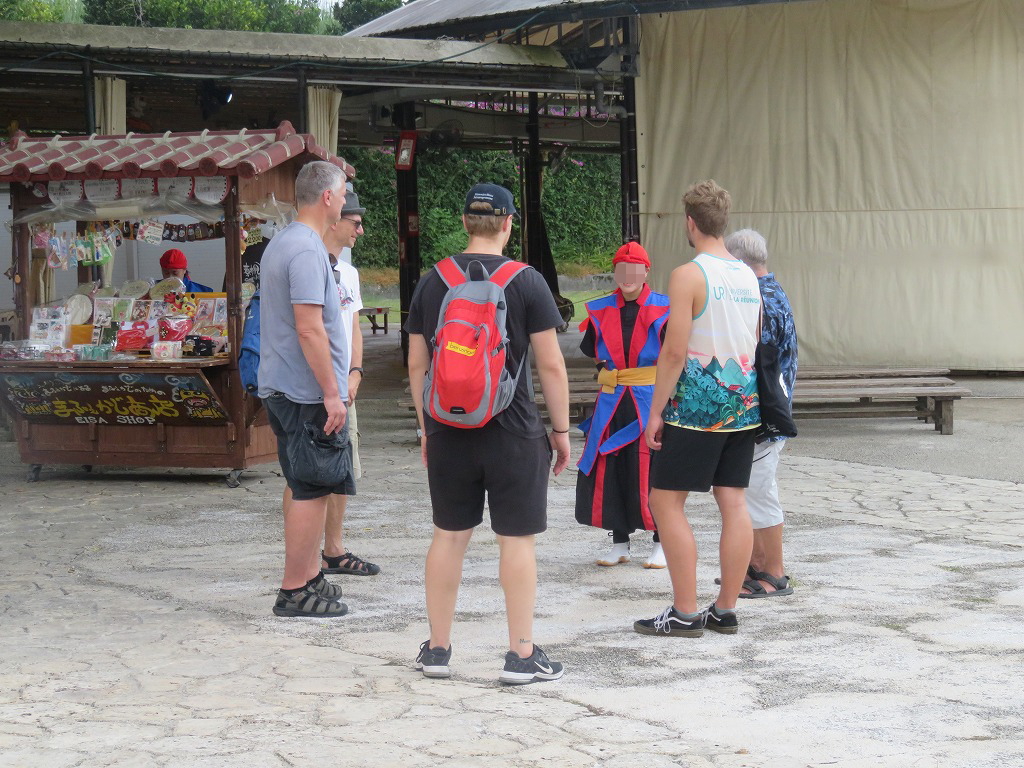
Powerful Eisa dance performances are held regularly throughout the day. After the show, you may see international tourists gathered around the performers for photos. Please note that photography and filming are strictly prohibited during the actual performances.
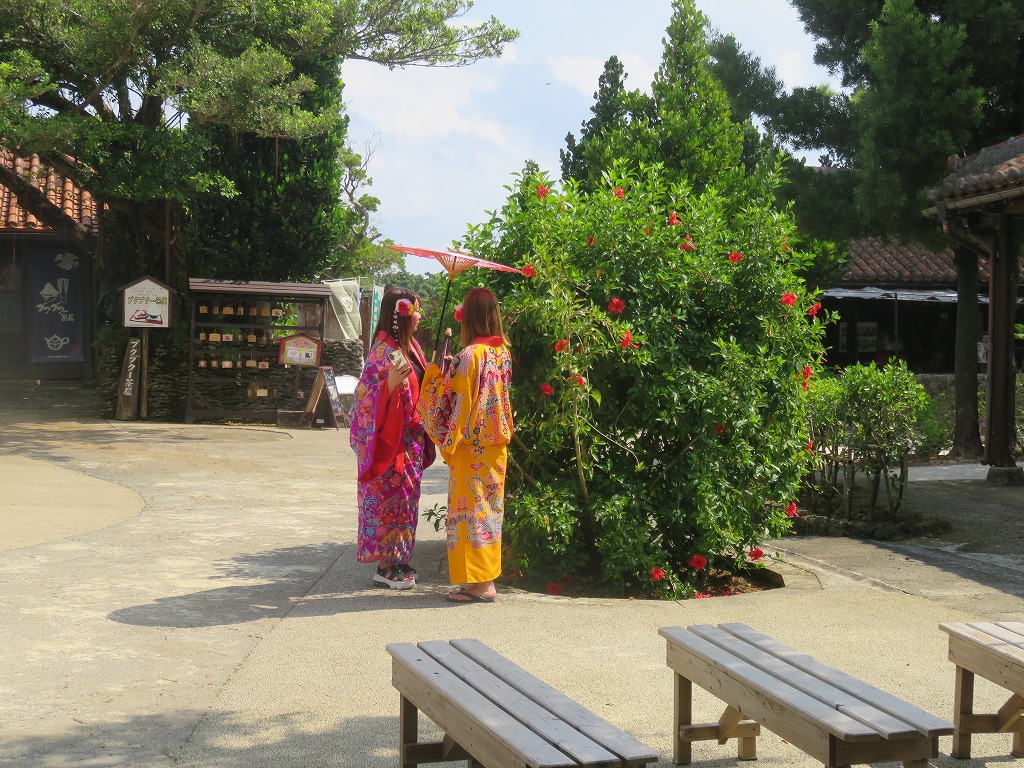
The park offers various hands-on activities, including Bingata dyeing, Shisa painting, paper making, and Ryukyu glass blowing. A popular choice is the “Ryuso Stroll,” where you can dress in the vibrant traditional attire once reserved for Ryukyu royalty and nobility, allowing for a leisurely walk and memorable photos through the historic village area.
Location: 1336 Maekawa, Tamagusuku, Nanjo City, Okinawa
Hours: 9:00 AM – 5:30 PM (Last entry at 4:00 PM)
Phone:098-949-7421
Senagajima Umikaji Terrace
A Tiny Island Connected by a Bridge Over the Sea
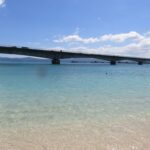
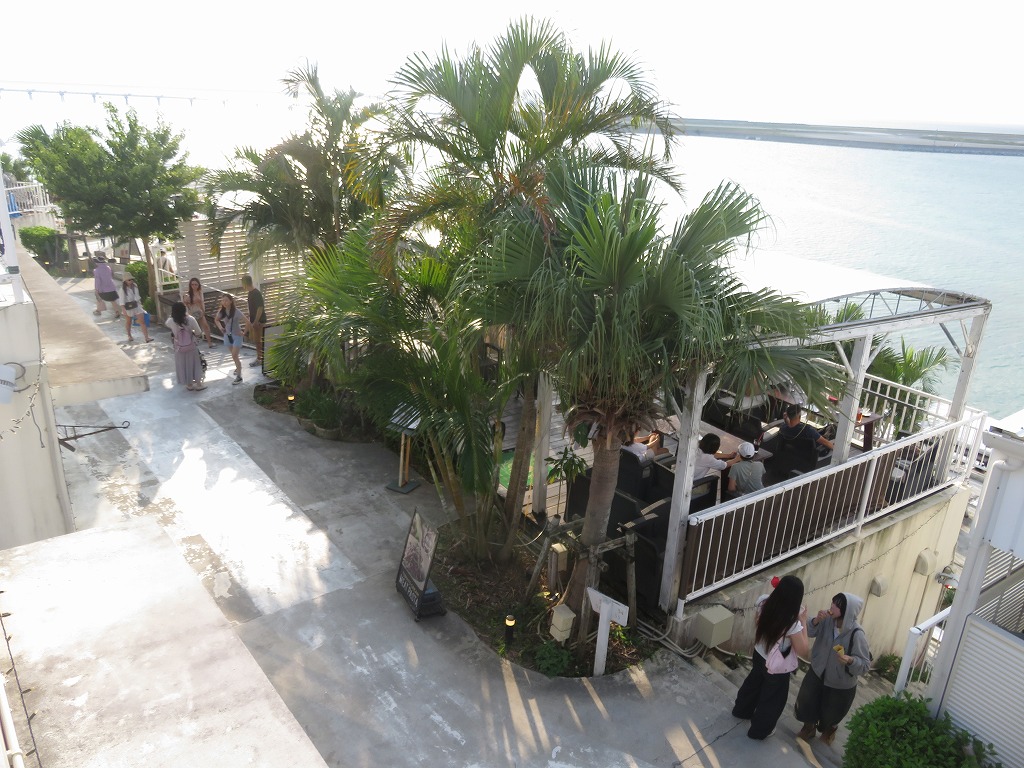
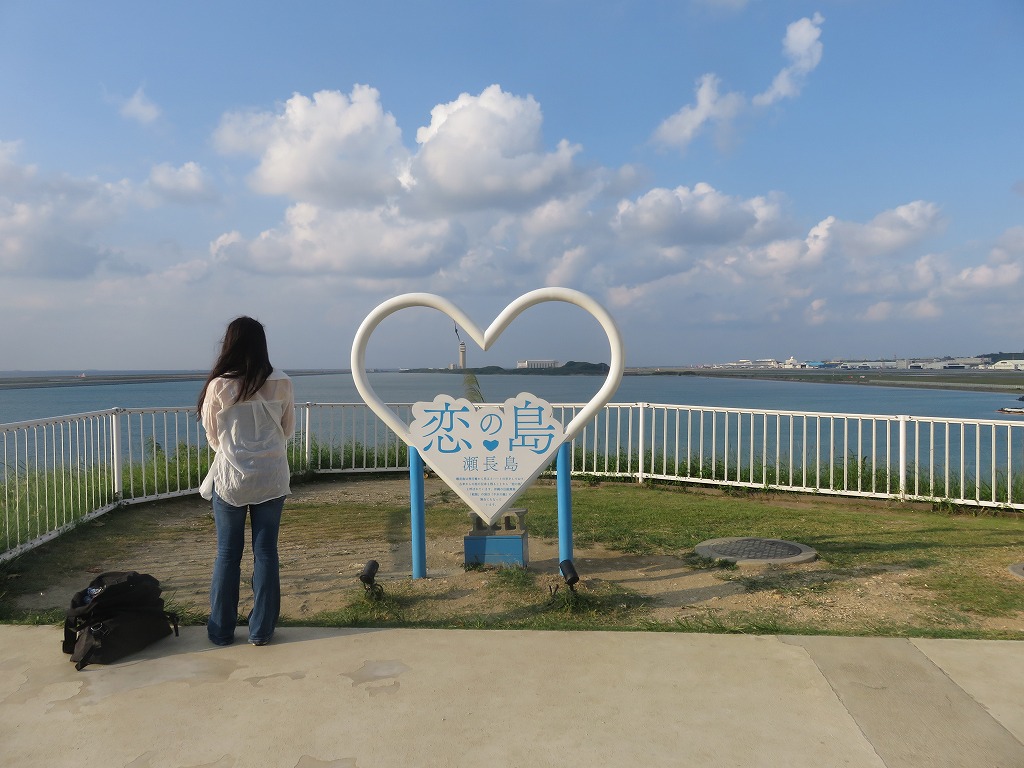
Located on Senaga Island, a small islet just 1.8 km in circumference off the coast of Southern Okinawa, Umikaji Terrace is a picturesque resort often called “The Amalfi of Japan.” With its iconic white buildings terraced against the blue ocean, it is a trendy destination especially popular among young couples and travelers.
Location: 174-6 Senaga, Tomigusuku City, Okinawa
Hours: 10:00 AM – 9:00 PM (Hours may vary by individual shops)
Okinawa Prefectural Museum & Art Museum (OkiMu)
A Cultural Landmark Inspired by Traditional Okinawan Castles
Affectionately known as “OkiMu,” this is the largest cultural facility in the prefecture, housing both a museum and an art museum under one roof. The museum explores the theme of “Living with the Sea and Islands,” showcasing Okinawa’s unique nature, history, and culture. Visitors can trace the island’s journey from the birth and fall of the Ryukyu Kingdom to the post-war era and into the future.
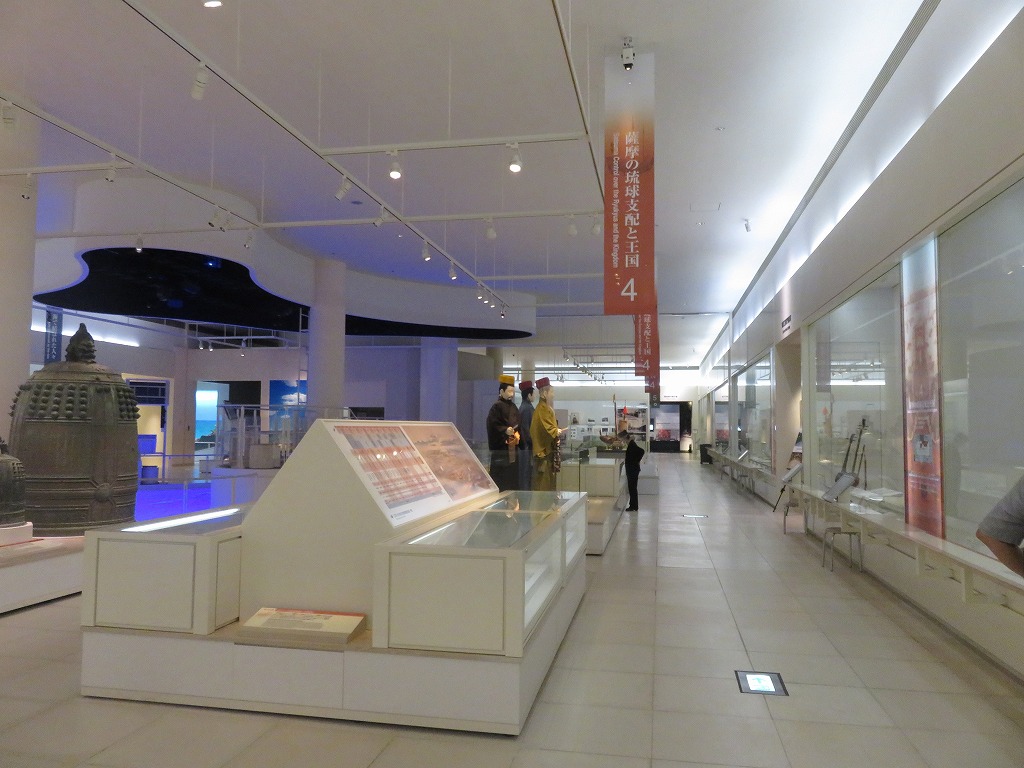
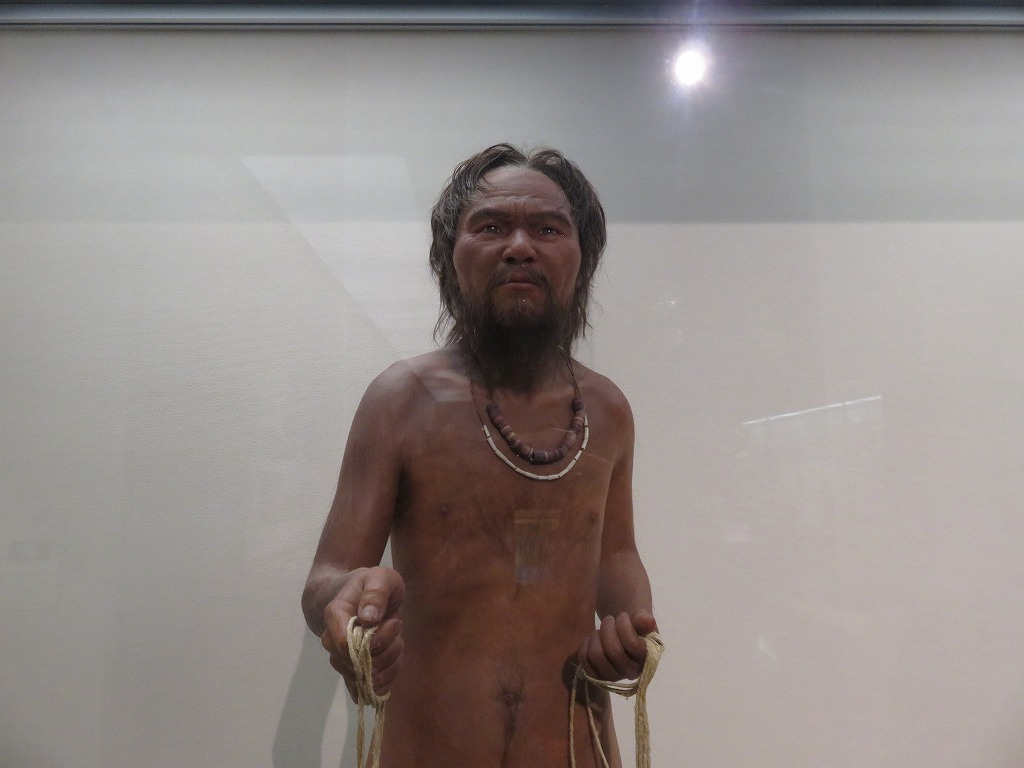
The museum displays fascinating artifacts and materials related to “Minatogawa Man,” the Paleolithic humans whose history was introduced at the Valley of Gangala.
In the Art Museum section, the focus is on modern and contemporary art from Okinawa, Japan, and other Asian countries. The collection includes oil and watercolor paintings inspired by Okinawa’s climate, sculptures, and video art (films and multimedia works).
Location: 3-1-1 Omoromachi, Naha City, Okinawa
Hours: Tue, Wed, Thu, Sun: 9:00 AM – 6:00 PM (Last entry 5:30 PM) /Fri, Sat: 9:00 AM – 8:00 PM (Last entry 7:30 PM)
Closed: Mondays, Year-end/New Year holidays, and maintenance days (please check the official website).
Phone:098-941-8200
Naha Kokusai-dori Shopping Street
A Vibrant Street Lined with Local Souvenirs and Eateries
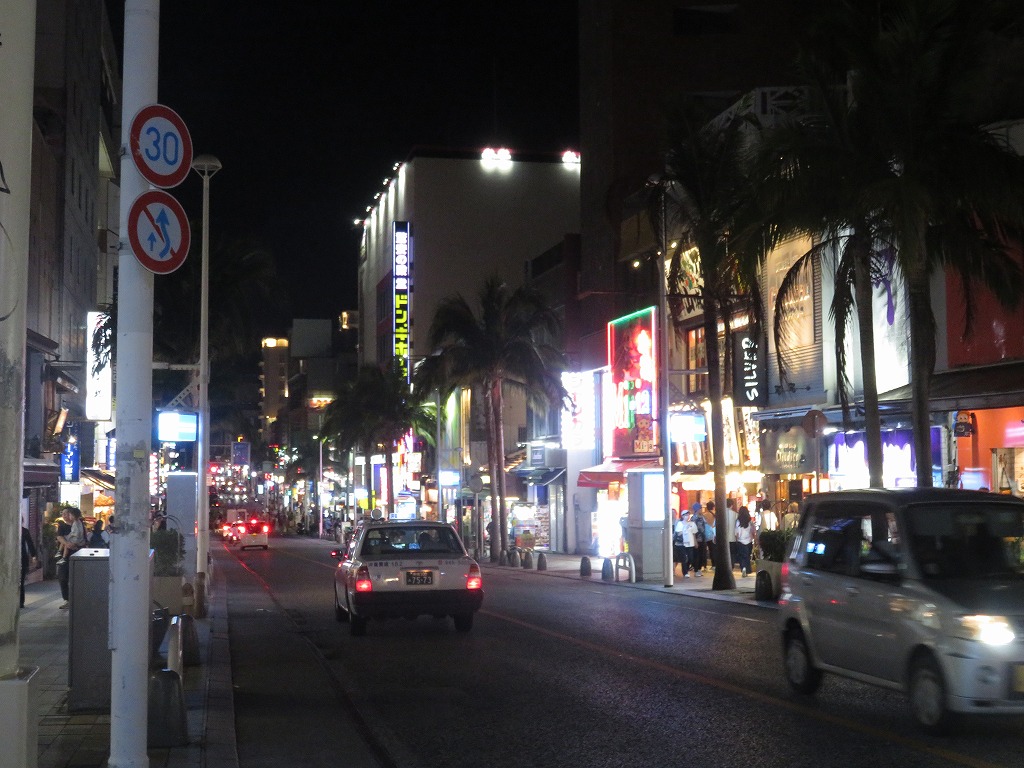
Spanning approximately 1.6 kilometers, Kokusai-dori is Okinawa’s premier shopping street, packed with shops unique to the island. Often called the “Miracle Mile” for its rapid post-war recovery, the street is home to about 600 businesses, including department stores, restaurants, boutiques, and hotels. It is a bustling destination for travelers looking for souvenirs and stays lively well into the night.
Location: 3-2-10 Makishi, Naha City, Okinawa
Access: A short walk from Prefectural Office Station (Kenchomae), Miebashi Station, or Makishi Station on the Yui Rail.
Hours: Typically 10:00 AM – 10:00 PM (Varies by shop; many restaurants stay open late)
Okinawan Vegetables & Fruits
Discover Rare Shapes and Extraordinary Flavors
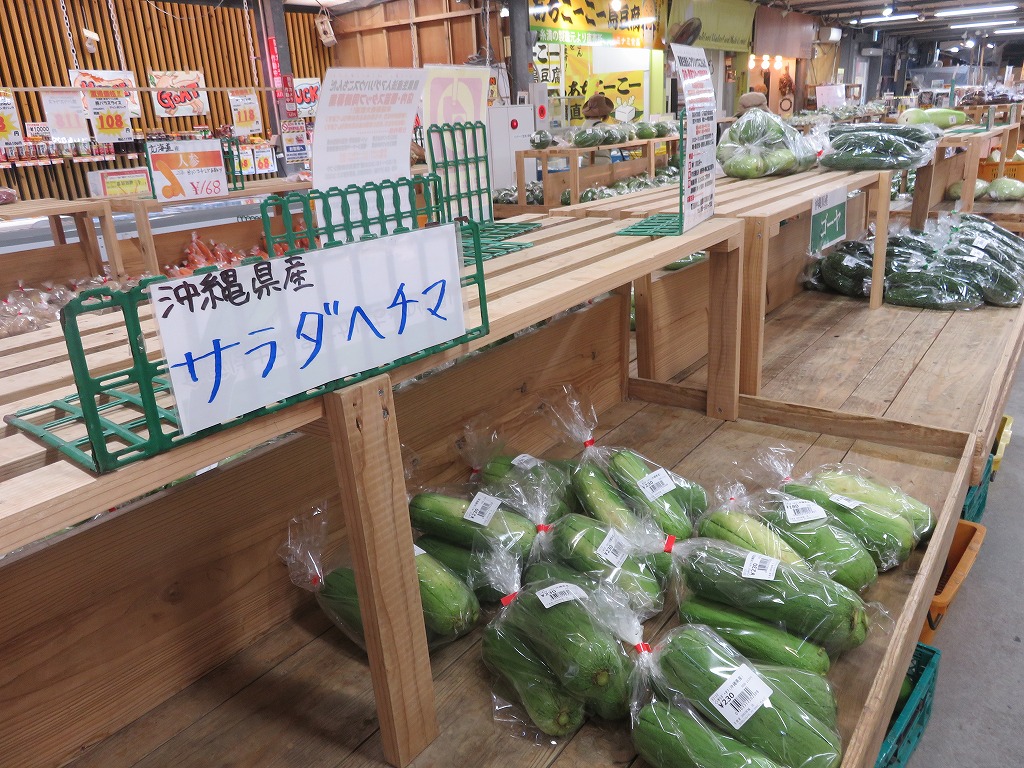
In Okinawa, loofah is known as “Nabera” and is commonly enjoyed in stir-fry dishes. Its light flavor pairs perfectly with bold seasonings like miso. While typical loofah is cooked, the “Salad Loofah” shown here is incredibly juicy and can be eaten raw. Of course, you’ll also see plenty of Goya (bitter melon) available at the markets.
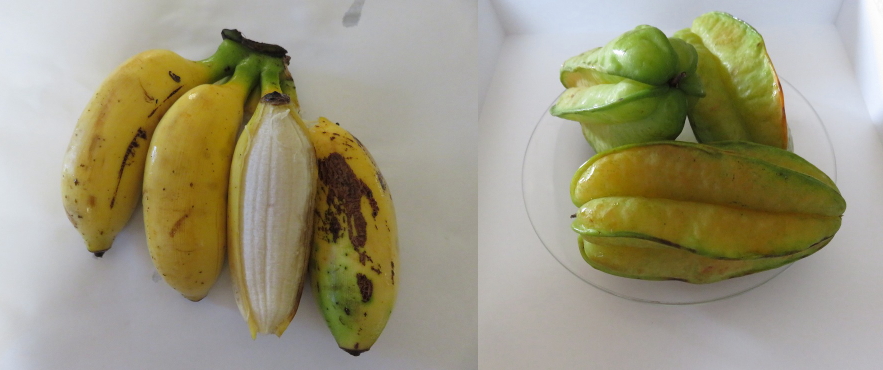
Here we have Shima Bananas and Starfruit. Shima Bananas are characteristically smaller than the varieties usually found in supermarkets. Starfruit, true to its name, forms perfect star shapes when sliced. One of the rarest fruits you might encounter is the Atemoya. It’s quite hard to find; I only saw it twice during my trip, and it’s usually quite expensive.
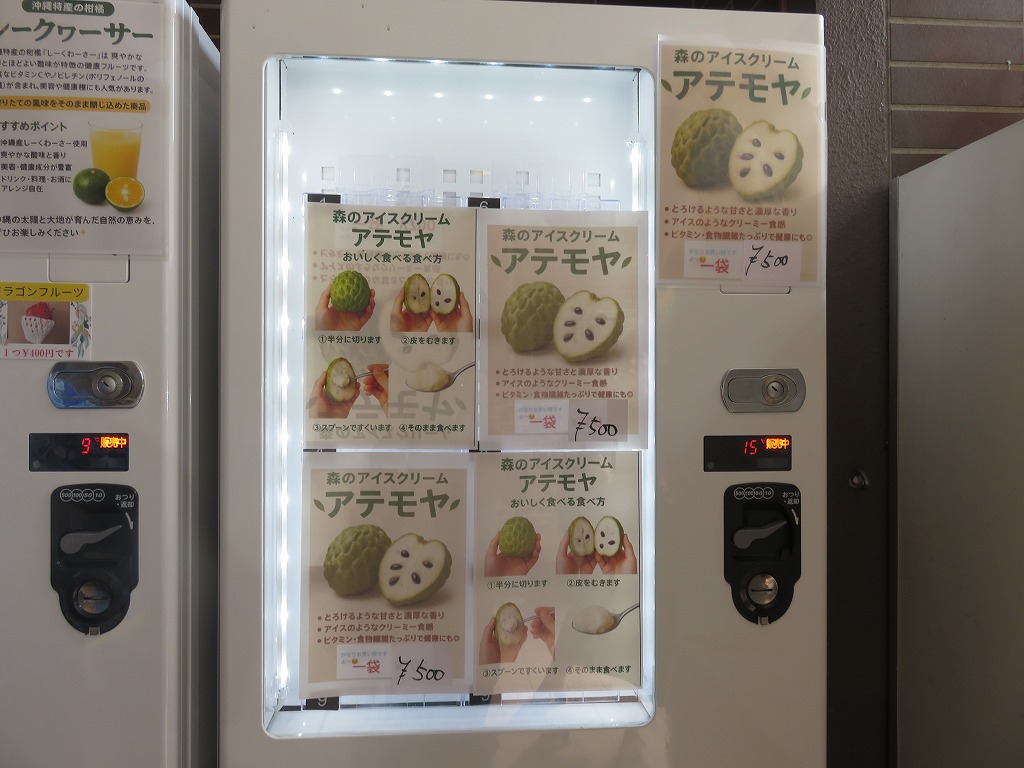
I happened to find an Atemoya vending machine in front of a local diner, where they were sold at very reasonable prices! I bought these fruits to take home as souvenirs. However, it is important to note that due to emergency pest control measures against the “Melon Fly” (Seguro-urimibae), some fruits and vegetables—including Atemoya, Dragon Fruit, Watermelon, Goya, and Papaya—cannot be taken out of Okinawa at this time. Please check the latest regulations before you travel.
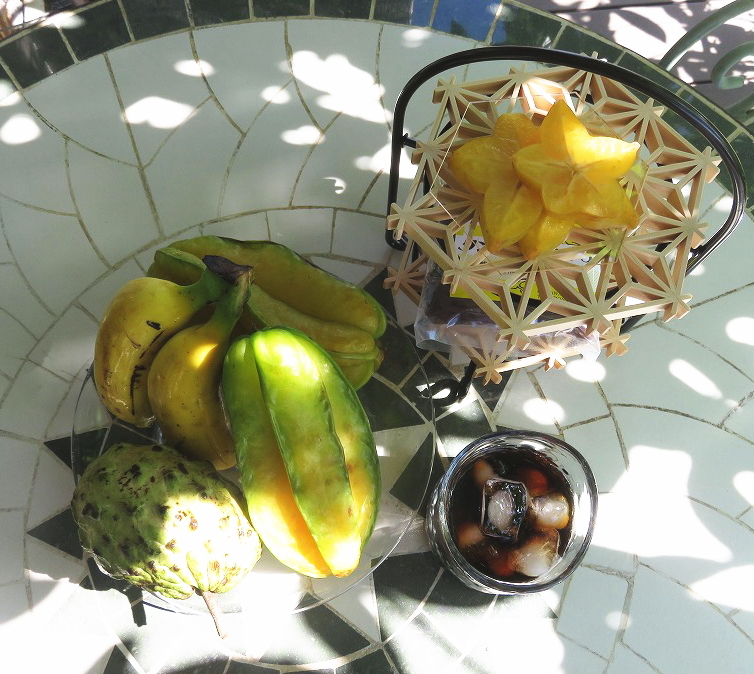
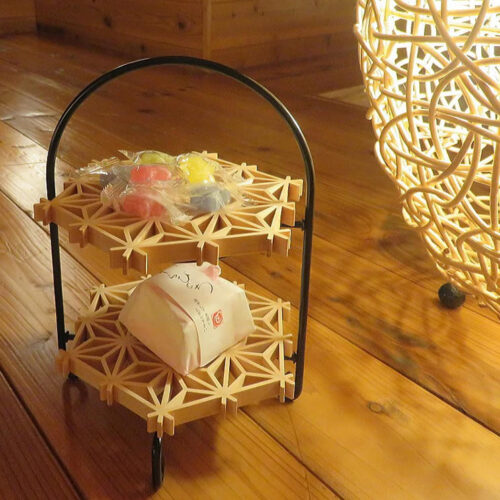
I placed the sliced starfruit on a “Kumiko” woodcraft stand. Its bright color and shape are beautiful, though the flavor is quite mild and refreshing. On the bottom left is the Atemoya. It has a rich, creamy texture and intense sweetness, similar to the sugar apple (Shakatou) found in Taiwan. The glass is a Ryukyu glass cup I made myself during a craft experience.
Kumiko cake stand >